Yamaha E40G 40HP Enduro Nigeria
Yamaha E40G 40HP Enduro Nigeria: A Practical Buying Guide for Serious Boat Owners
If you are looking for a dependable Yamaha E40G 40HP Enduro Nigeria buyers can trust, the E40G deserves serious attention. This 40 horsepower two-stroke outboard is designed for users who value simple operation, useful power, manageable weight, and dependable performance. It is especially attractive for commercial boats, fishing boats, workboats, transport boats, and other applications where an outboard motor must work hard in demanding conditions.
The Yamaha E40G 40HP Enduro uses a two-cylinder, 669 cm³ engine. Yamaha lists a maximum prop-shaft output of 29.4 kW, equivalent to 40 PS, at 5,000 rpm. The engine uses a carburetor, CDI ignition, manual tilt, tiller-handle controls, and pre-mixed fuel and oil lubrication. Yamaha lists dry weight with propeller at approximately 65–71 kg, depending on configuration.
For Nigerian buyers, these specifications make the Yamaha E40G 40HP Enduro outboard motor worth considering for boats that need a practical balance between thrust and portability. Before ordering, however, buyers should confirm the exact shaft length, starting system, propeller specification, availability, documentation, and suitability for their boat. Model configurations can vary by market, and Yamaha advises owners to consult the relevant manual and local distributor or dealer.
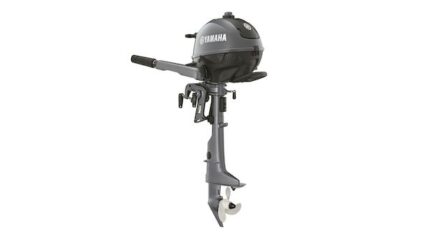
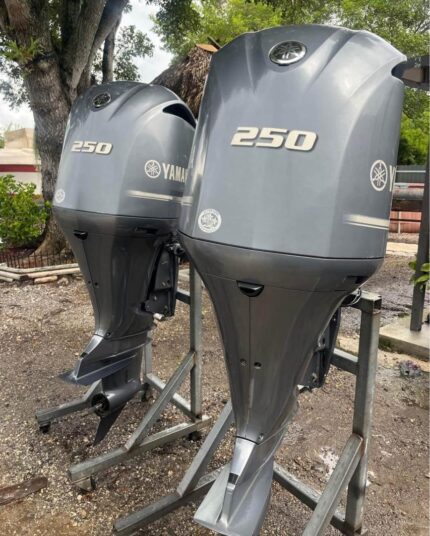
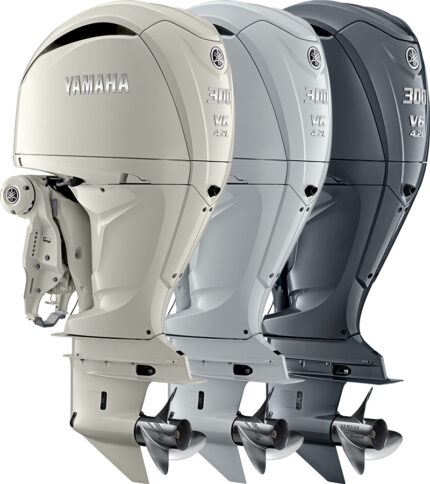
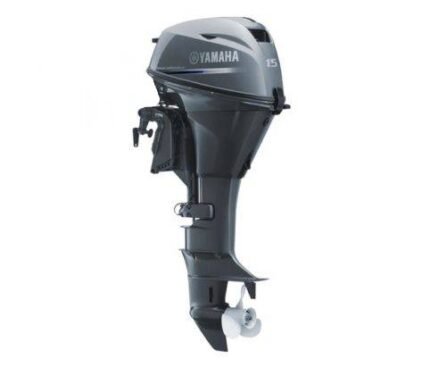
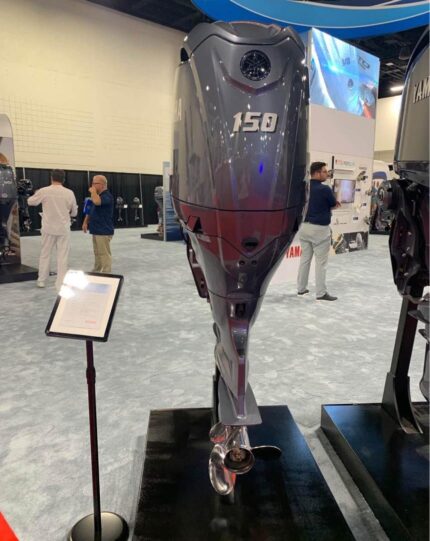
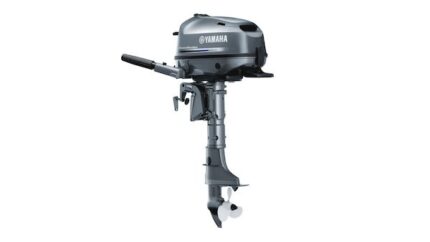
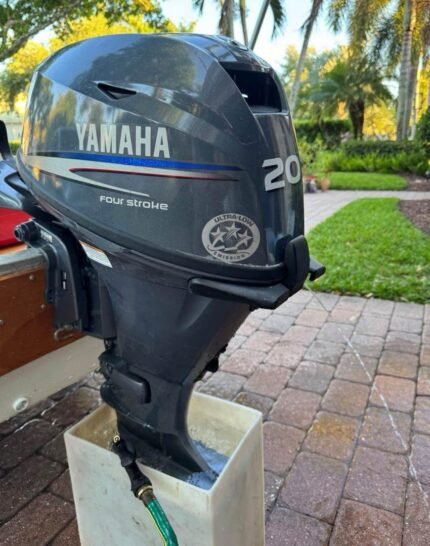
<u><a href=”https://jpmarineinc.com/shop“>Shop Yamaha Outboard Motors</a></u>
Why Choose the Yamaha E40G 40HP Enduro in Nigeria?
The Yamaha E40G is aimed at users who need a straightforward outboard engine rather than a complicated propulsion system. Its two-stroke design provides a familiar mechanical layout, while the tiller-handle configuration makes it suitable for boats where direct steering and throttle control are preferred.
The engine produces 40 PS at 5,000 rpm, giving it useful power for many small and medium-sized working boats. The actual performance will depend on the hull design, boat weight, propeller, load, water conditions, and engine setup. A 40HP rating should therefore not be treated as a guarantee of a particular boat speed.
The E40G is also relatively light for its power class. Yamaha lists its dry weight with propeller at 65–71 kg. This can be valuable for operators who regularly remove, transport, service, or reposition an outboard motor.
If you are comparing available models, you can browse the wider Yamaha outboard range to identify the engine that best matches your boat.
Yamaha E40G 40HP Enduro Specifications
Understanding the specifications is important before you buy a Yamaha E40G 40HP Enduro Nigeria.
| Specification | Yamaha E40G |
|---|---|
| Engine type | In-line 2-cylinder, 2-stroke |
| Displacement | 669 cm³ |
| Bore × stroke | 78.0 × 70.0 mm |
| Maximum output | 40 PS / 29.4 kW |
| Rated engine speed | 5,000 rpm |
| Fuel induction | Carburetor |
| Ignition | CDI |
| Control | Tiller handle |
| Starting system | Manual or manual & electric, depending on model |
| Tilt system | Manual tilt |
| Lubrication | Pre-mixed fuel and oil |
| Shaft options | Short and Long, depending on model |
| Approx. dry weight with propeller | 65–71 kg |
| Gear ratio | 1.85 (24/13) |
These figures come from Yamaha’s published Enduro specifications. Yamaha notes that equipment and model availability can differ between countries or regions.
That last point matters when purchasing in Nigeria. Always ask the seller to confirm the exact model configuration before paying. Do not assume that every Yamaha E40G advertised online has the same shaft length or starting arrangement.
Yamaha E40G 40HP Performance for Nigerian Boats
The right outboard depends heavily on the boat. A Yamaha 40HP outboard Nigeria buyer should consider the hull length, hull material, passenger capacity, cargo weight, fuel load, operating environment, and manufacturer’s recommended horsepower range.
For fishing applications, the E40G can be attractive because the 40HP class offers substantially more power than smaller portable outboards while remaining relatively manageable. For commercial transport, the engine may also be suitable where the boat manufacturer approves a 40HP installation.
However, buyers should avoid overloading the boat simply because the engine has enough power to move it. Overloading can reduce stability, increase fuel consumption, and make navigation less predictable.
For professional operators, choosing the correct propeller is equally important. The propeller must match the boat and allow the engine to operate within its recommended full-throttle range. Yamaha’s published comparison information lists an E40G full-throttle operating range of 4,500–5,500 rpm.
Why the Two-Stroke Design Can Appeal to Buyers
The Yamaha E40G 2 stroke Enduro follows a traditional two-stroke outboard approach. This can appeal to operators who want a relatively straightforward mechanical system and are already familiar with pre-mixed fuel and oil operation.
The lubrication system is particularly important. Yamaha specifies pre-mixed fuel and oil for the E40G. Owners must therefore use the correct fuel-and-oil mixture specified for their particular engine and operating conditions.
Do not guess the oil ratio. Always follow the engine’s owner’s manual or instructions supplied with the exact model.
Yamaha provides a dedicated online library for manuals and documents, which can help owners locate documentation for their region and model.
Yamaha E40G for Fishing and Commercial Boats
Nigeria has extensive inland and coastal water activity. Fishing, passenger transport, logistics, tourism, and workboat operations all create demand for reliable propulsion.
The Yamaha E40G 40HP Enduro for fishing boats can be considered where the boat is correctly matched to the engine. A fishing operator may value the combination of 40HP output and comparatively manageable weight.
Commercial users should look beyond the purchase price. Total ownership cost matters. Consider:
- Engine purchase price
- Propeller cost
- Fuel consumption
- Two-stroke oil requirements
- Routine servicing
- Spare parts availability
- Transportation
- Installation
- Documentation
- Import or customs charges
- Downtime during repairs
A cheaper engine is not always the cheapest engine to operate. A better buying decision considers the complete operating lifecycle.
You can also review Yamaha 2-stroke outboards if you want to compare other two-stroke options.
Shaft Length Matters When Buying a Yamaha E40G
One of the most important details to confirm before ordering is shaft length.
Yamaha lists the E40G with S: 444 mm (17.5 inches) and L: 571 mm (22.5 inches) transom-height configurations, depending on model.
Choosing the wrong shaft length can cause installation and performance problems. The outboard should match the boat’s transom dimensions and the manufacturer’s recommended installation height.
Do not choose a short-shaft or long-shaft engine based only on appearance. Measure the boat correctly and confirm the required configuration with an experienced marine technician.
This is especially important for buyers purchasing online. Ask for the exact model code, shaft length, starting system, and available propeller before completing your order.
Buying Yamaha E40G 40HP Enduro in Nigeria
If your goal is to buy Yamaha E40G 40HP Enduro Nigeria, start by identifying the exact application.
Ask yourself:
- What boat will the engine power?
- What is the boat’s recommended horsepower range?
- What shaft length does the boat require?
- Do you need tiller control?
- Do you need manual or electric starting?
- What propeller is recommended?
- Is the engine new, unused, or previously operated?
- What warranty is offered?
- Are genuine parts available?
- What documents will accompany the engine?
A serious buyer should request clear specifications instead of relying on a generic product title.
You can visit JP Marine to explore marine products and available outboard options.
For broader product shopping, the JP Marine shop provides another useful starting point.
What to Check Before Paying
When buying a Yamaha E40G 40HP outboard motor for sale in Nigeria, inspect the commercial terms as carefully as the engine itself.
Confirm whether the quoted price includes the propeller. Yamaha notes that propellers can be sold separately for some outboard models.
Also confirm:
- Engine model and identification details
- Shaft length
- Factory configuration
- Included accessories
- Propeller availability
- Warranty conditions
- Delivery arrangements
- Payment terms
- Export or import documentation
- Expected delivery time
- After-sales support
If the engine is being imported, buyers should also review applicable Nigerian customs procedures and requirements. The Nigeria Customs Service provides official information and trade-facilitation services for importers.
Do not rely on an unofficial social-media post for customs requirements. Import rules, duties, documentation, and procedures can change.
Maintenance of a Yamaha E40G in Nigeria
Good maintenance is one of the best ways to protect your investment.
The E40G is a mechanical engine, but it still requires proper care. Routine maintenance should include inspection of the cooling system, spark plugs, fuel system, propeller, gearcase, fasteners, steering components, and other items specified by the manufacturer.
Flush and inspect the engine as required after operation in saltwater or contaminated environments. Check the propeller for fishing line, impact damage, or deformation. A damaged propeller can affect acceleration, vibration, and engine loading.
Use clean fuel and the correct two-stroke oil. Contaminated fuel can cause poor running and fuel-system problems.
For technical maintenance procedures, use the appropriate Yamaha documentation rather than relying on generic internet instructions. Yamaha’s official documentation library provides access to regional manuals and documents.
Yamaha E40G Fuel and Operating Considerations
Fuel management is another major consideration for Nigerian commercial operators.
The E40G uses a carburetor and pre-mixed fuel-and-oil lubrication. Because fuel consumption changes with load, throttle position, hull design, propeller choice, water conditions, and operating style, buyers should not rely on one advertised fuel-consumption figure for every boat.
A properly matched propeller and sensible operating speed can help improve efficiency.
Commercial operators should also maintain a fuel reserve. Never plan a trip based on the assumption that the tank will be sufficient without considering weather, currents, loading, detours, or delays.
Safety on Nigerian Waterways
A powerful outboard should always be combined with responsible boat operation.
The National Inland Waterways Authority states that its regulatory responsibilities include vessel registration and licensing, navigation regulations, environmental regulations, inspections, and compliance.
NIWA has also emphasized the importance of life jackets and compliance with waterways safety requirements.
For commercial operators, safety should include properly maintained boats, suitable personal flotation devices, communication equipment, navigation awareness, emergency planning, and trained operators.
The Nigerian Maritime Administration and Safety Agency is another important official source for Nigerian maritime regulation and safety information.
Before operating a boat commercially or in regulated waters, verify which registration, licensing, safety, and operational requirements apply to your specific vessel and location.
Yamaha E40G vs Yamaha 4-Stroke Outboards
Some buyers may wonder whether they should purchase the E40G or choose a Yamaha four-stroke engine.
The answer depends on your priorities.
The E40G’s two-stroke configuration may appeal to buyers who prefer a traditional Enduro engine, simple controls, and a familiar mechanical layout. A modern four-stroke model may appeal to users who prioritize different characteristics such as four-stroke operation and model-specific fuel-management technology.
There is no single engine that is best for every Nigerian boat.
Compare the engine with the boat, workload, operating environment, maintenance resources, and long-term ownership goals.
If you prefer to investigate four-stroke options, visit the Yamaha 4-stroke outboard section.
Genuine Parts and Alternative Marine Products
Buying an outboard is only the beginning of ownership. Long-term parts support can be just as important.
Before purchasing, ask how replacement parts will be sourced. This includes spark plugs, propellers, fuel-system components, gaskets, water-pump components, filters, ignition components, and other service items.
Buyers who operate different brands can also compare alternatives through Evinrude marine products.
The goal is not simply to find the lowest initial price. The goal is to obtain a reliable propulsion system that can be maintained throughout its working life.
Is the Yamaha E40G 40HP Enduro Right for You?
The Yamaha E40G 40HP Enduro Nigeria market is particularly relevant to buyers who need a practical 40HP two-stroke outboard for suitable fishing, transport, workboat, and recreational applications.
Its key strengths include:
- 40 PS maximum output
- Two-cylinder configuration
- 669 cm³ displacement
- Carburetor fuel induction
- CDI ignition
- Tiller-handle control
- Manual tilt
- Pre-mixed fuel and oil lubrication
- Approximately 65–71 kg dry weight with propeller
- Short- and long-shaft configurations, depending on model
These specifications are based on Yamaha’s published E40G information.
The best purchase, however, is the engine that correctly matches your boat and operating needs. Confirm the configuration before payment, especially when purchasing online or importing into Nigeria.
Where to Buy Yamaha E40G 40HP Enduro Nigeria
If you are ready to purchase a Yamaha E40G 40HP Enduro Nigeria, focus on specification accuracy, seller credibility, documentation, warranty, delivery, and after-sales support.
Start by reviewing the JP Marine home page and the marine product shop. You can also browse the Yamaha product category and compare related outboard products.
For buyers who are specifically interested in two-stroke Yamaha engines, the Yamaha 2-stroke category is particularly relevant.
Before ordering, provide the seller with your boat’s make, model, transom measurement, intended load, operating environment, and preferred control system. This allows the correct engine configuration to be identified instead of choosing solely from a product title.
The Yamaha E40G 40HP Enduro outboard motor is a serious option for buyers seeking a compact and capable 40HP two-stroke engine. Yamaha’s published specifications show a 669 cm³, two-cylinder engine producing 40 PS at 5,000 rpm, with carbureted fuel induction, CDI ignition, tiller control, manual tilt, and pre-mixed lubrication.
For Nigerian buyers, the most important step is matching the engine to the boat. Confirm shaft length, propeller requirements, starting configuration, documentation, warranty, and local operating requirements before committing to a purchase.
For regulated waterways, check current requirements from NIWA and, where applicable, NIMASA. For imported equipment, consult the Nigeria Customs Service for current customs and trade information.
If you are buying for commercial fishing, passenger transport, cargo movement, or demanding recreational use, treat the purchase as an investment in your complete boat system. The right engine, correct installation, proper propeller, routine maintenance, safe loading, and trained operation will all contribute to reliable performance.